
Dubai-based architect Shaun Killa is redefining the architecture of the golf course with a new take on the traditional halfway house that’s not designed as a stop, but a place to truly hang out.
Shaun Killa’s latest project at Dubai’s newest golf residential community, Discovery Dunes, transforms the humble halfway house into an architectural invitation to slow down.
What better way to coax children through a game of golf than with a treasure hunt? In the 1990s, Discovery Land Company founder Mike Meldman did exactly that, stashing coolers filled with sodas and candy along the tee boxes to keep his two young sons engaged through a full round. That playful gesture, a series of small discoveries threaded through the course, became the seed for the company’s now-iconic ‘comfort stations’. The children might have grown up, but they hadn’t grown out of the need for some light relief, a pause in the game, or something social to break up the round.
It’s not that the idea of a comfort station (otherwise known as the halfway house, the traditional mid-round stop between the front and back nine) is new. But the way Discovery has rethought that pause shifts the concept from simply functional into something social, generous and culturally specific. After all, Meldman’s aim was never to create a luxury amenity for its own sake. He wanted to make golf inviting for children and families who might otherwise have been intimidated or bored.
“The experience Discovery built around them makes members seek them out beyond the game,” he explains. “What makes Discovery’s comfort stations unique is how we embrace the cultures, histories, and the people within these spaces to create authentic, one-of-a-kind experiences at each location.” That means date soft-serve, Chips Oman, za’atar croissants and RJ’s Dubai Chocolate. small, nostalgic gestures that evoke place and transform each stop into a mini-destination. “Members should feel a special comfort in all its forms, whether that’s relaxed, playful, or simply happy to be with friends creating new memories.” The food itself is part of that emotional register: familiar childhood treats sit alongside unexpected indulgences, encouraging people to linger, compare, share and be slightly surprised, rather than simply refuel and move on.
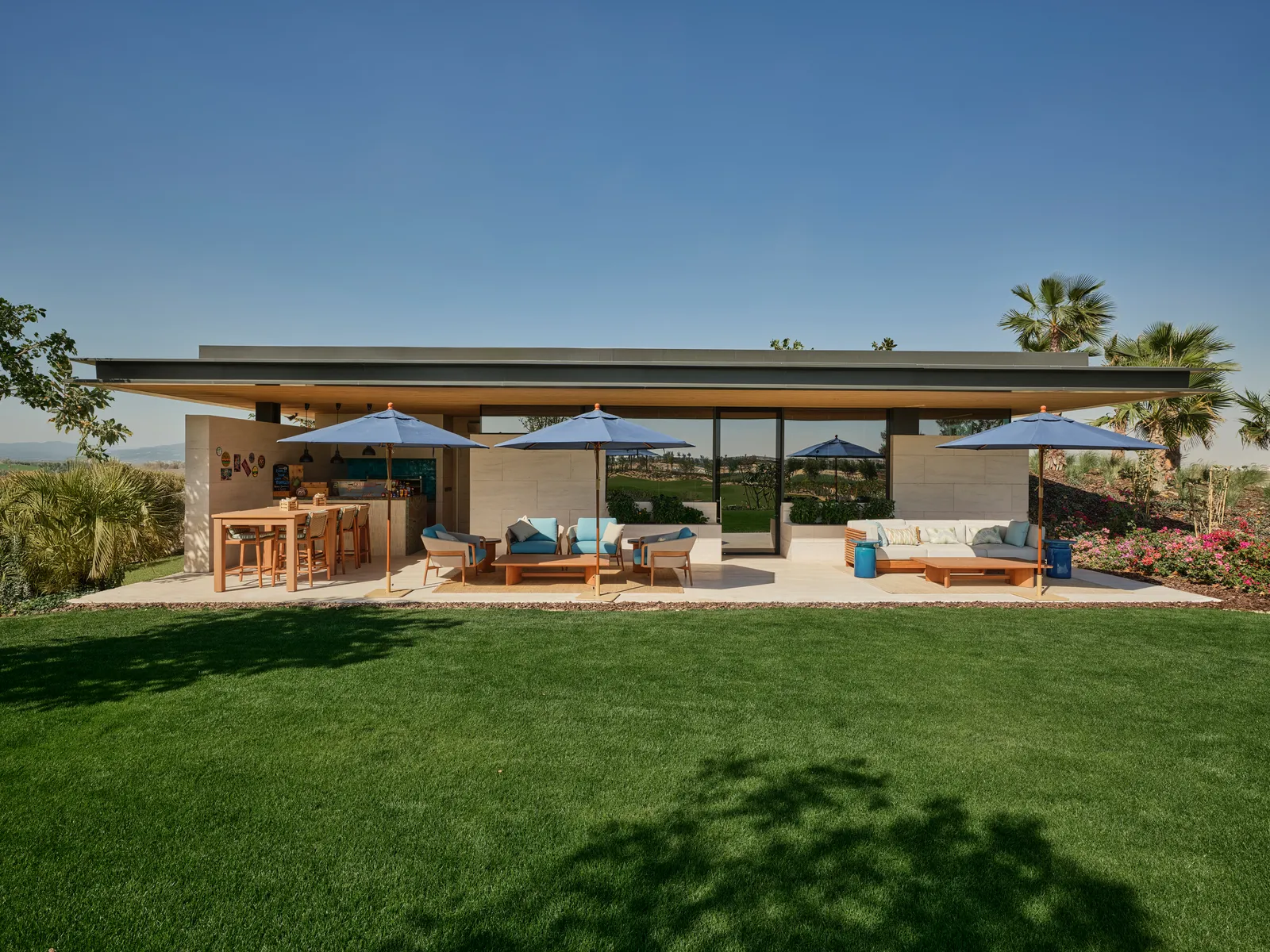
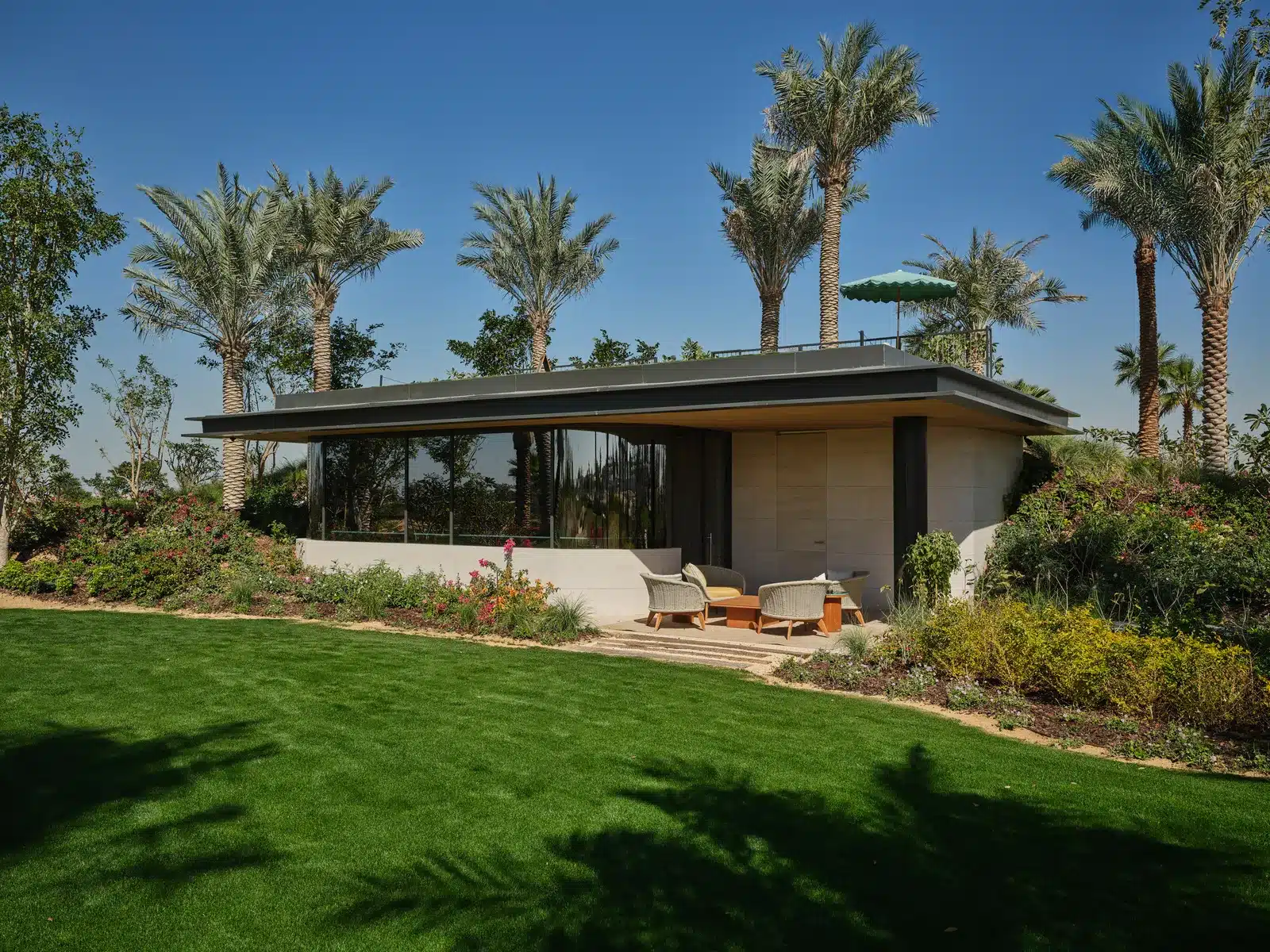
To give that idea physical form, Meldman turned to architect Shaun Killa. Based in Dubai, he was tasked with translating what had once been a casual tradition into something spatial and enduring. “On a Discovery Land Company golf course, the comfort stations are conceived as quiet pauses within the rhythm of play,” Killa says, adding that they are embedded into the landscape rather than expressed as standalone objects. Rather than designing monuments, he focused on designing moments of retreat: the rear of each building is nestled into landscaped mounds, allowing the structures to feel grounded and sheltered; from the fairway, they read as low, horizontal forms that dissolve into the terrain.
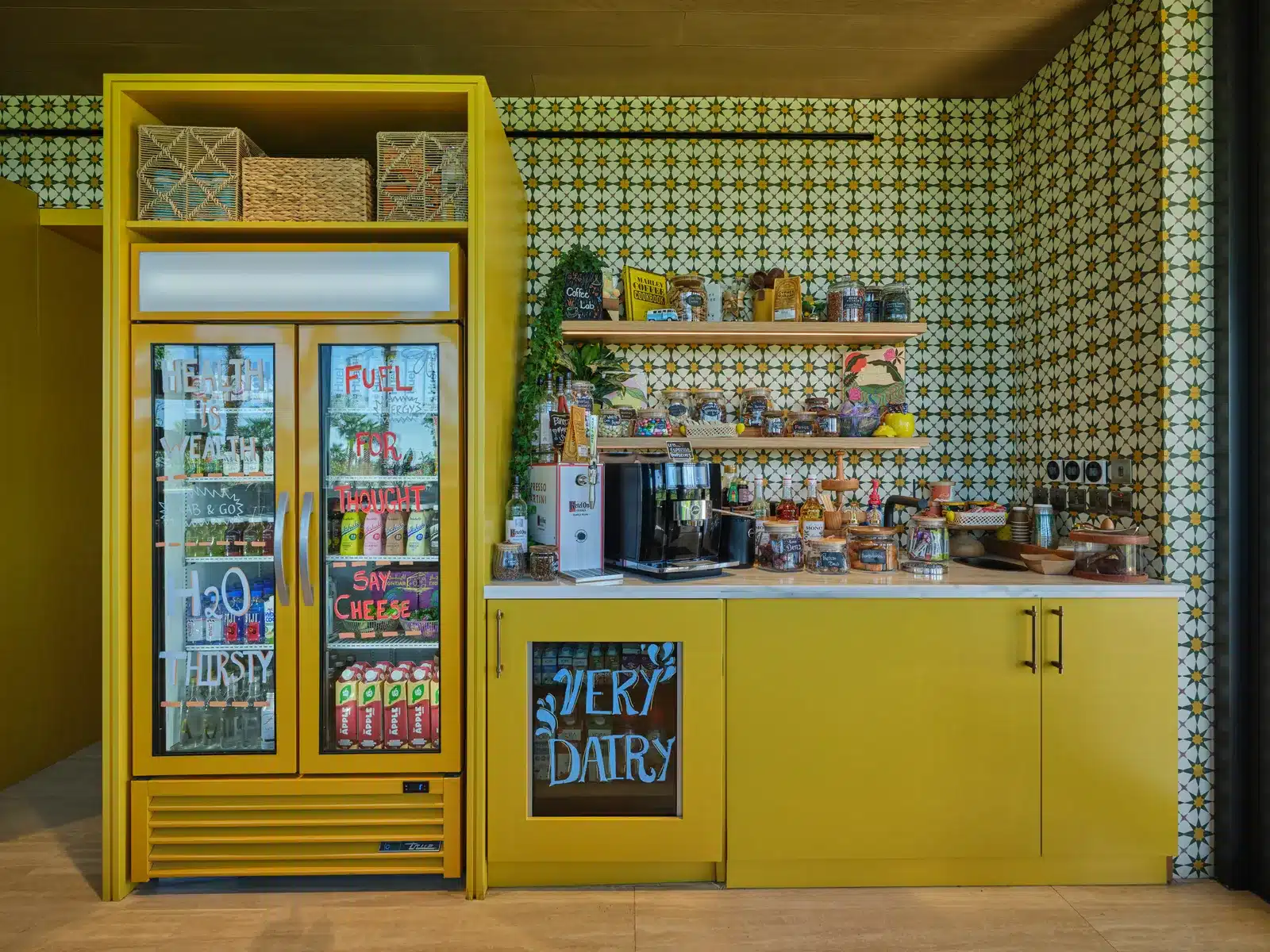
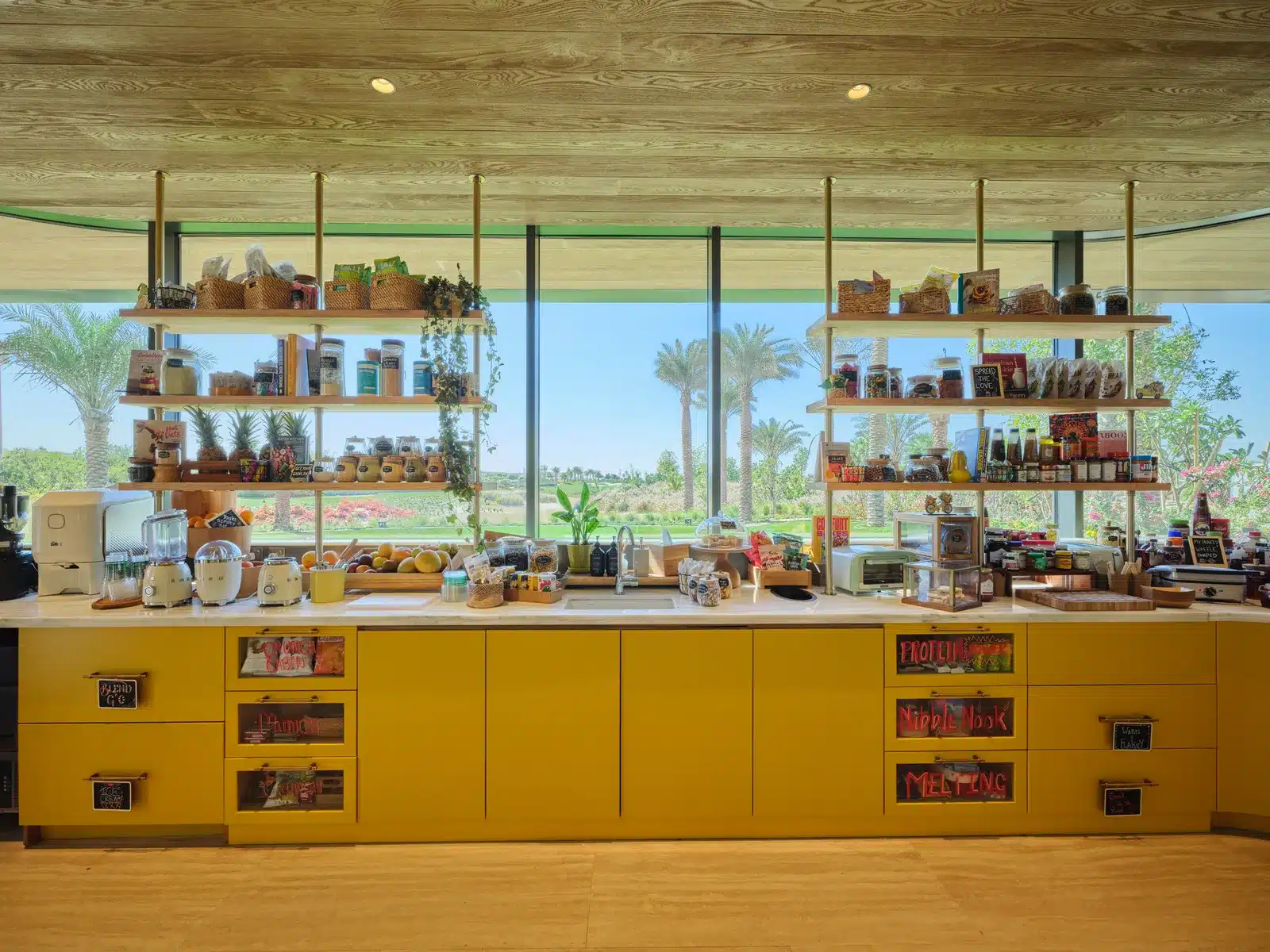
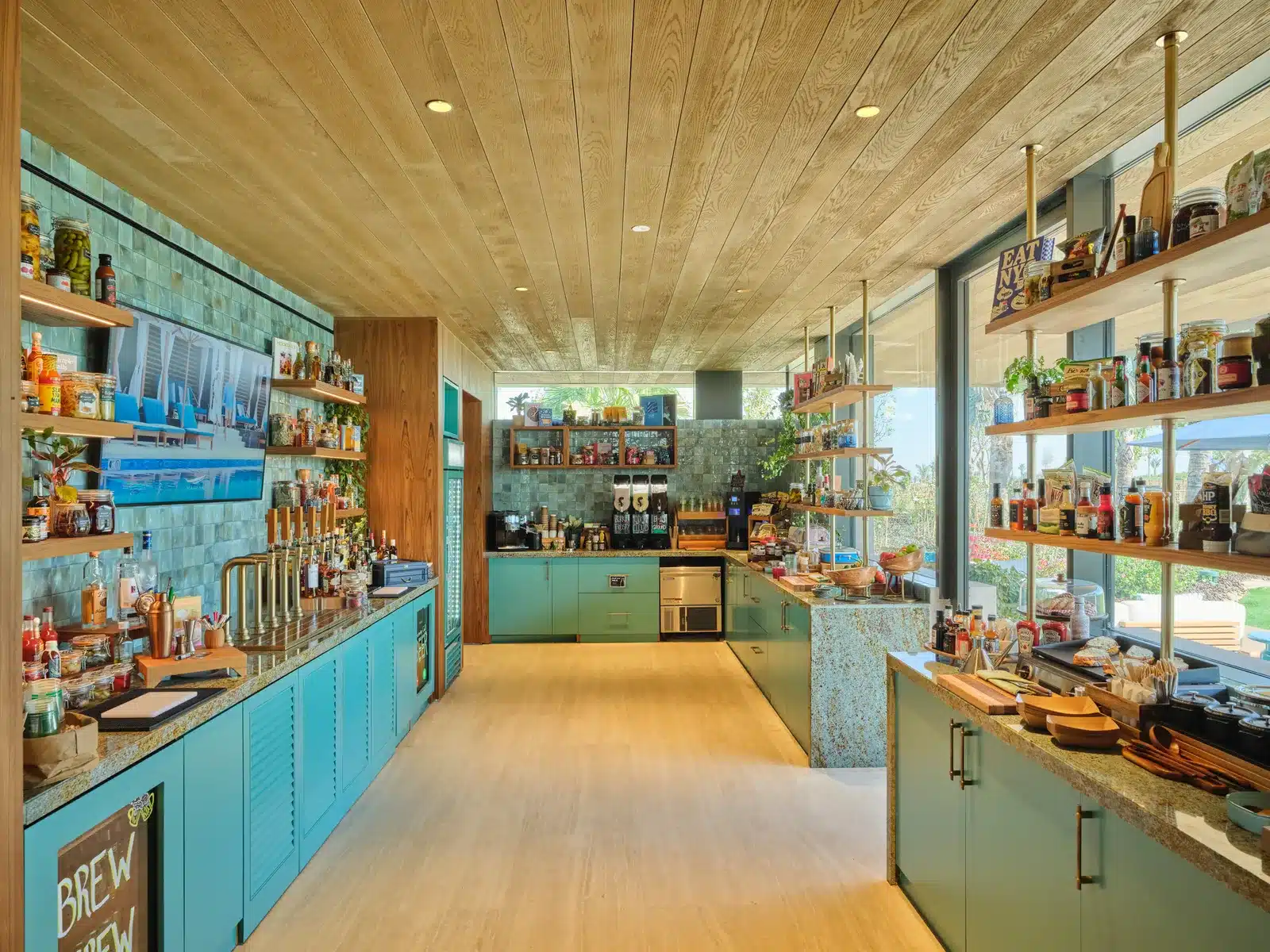
Killa’s material palette underscores that restraint. Natural stone, timber‑lined soffits and deep, flat roof planes provide shade and thermal mass, while interiors feature warm timber ceilings, stone or travertine floors and open shelving more reminiscent of a domestic kitchen than a commercial facility. At the first station on the fifth hole, dubbed Tee Top, the landscape even extends over the roof, allowing golfers to tee off from a grass‑covered canopy. Inside, players find breakfast burritos, fruit‑packed açaí bowls and cold brew on tap, an “unexpected twist” that captures the informal character of the course. The second station, Tap Room, on the thirteenth hole, frames panoramic lake views and offers smash‑burgers, global snacks and handcrafted beverages in a cooler palette of blue and teal tiles.
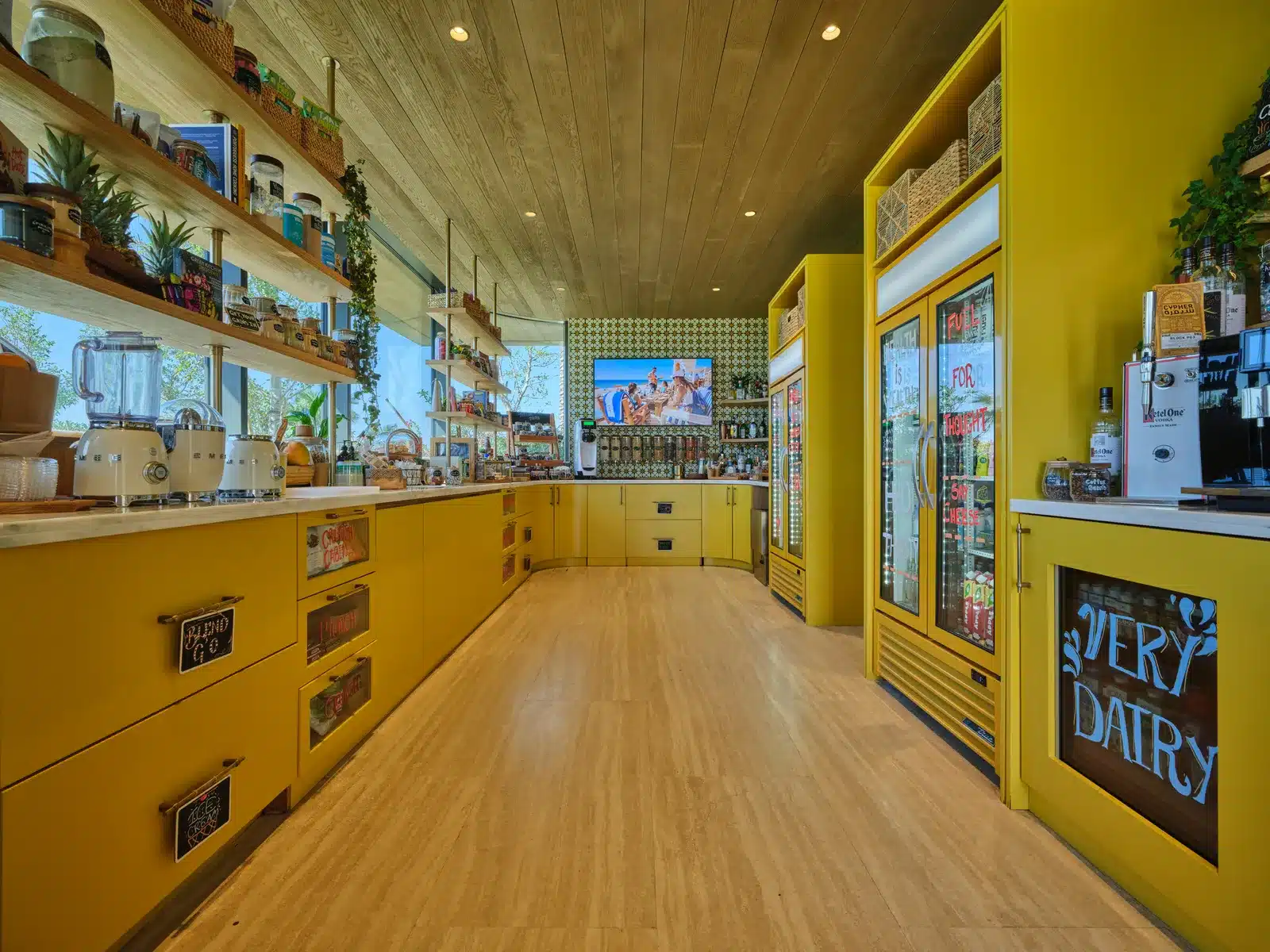
These design choices aren’t about ostentation; they’re about making people feel comfortable lingering. Shaun Killa admits that the biggest risk was allowing design intent to overpower ease. If the stations felt too slick or precious, they would become destinations to admire rather than pauses to inhabit. To avoid that, he kept lines simple, colours muted and proportions generous. “Luxury emerges through proportion, shade, material honesty and the care given to everyday details, rather than through formal architectural statements,” he notes. Shaun Killa adds that climate, ageing and maintenance are integral to the architecture’s longevity: deep overhangs, robust materials and low profiles ensure the buildings weather gracefully in the desert, while finishes are intentionally forgiving and easily maintained.
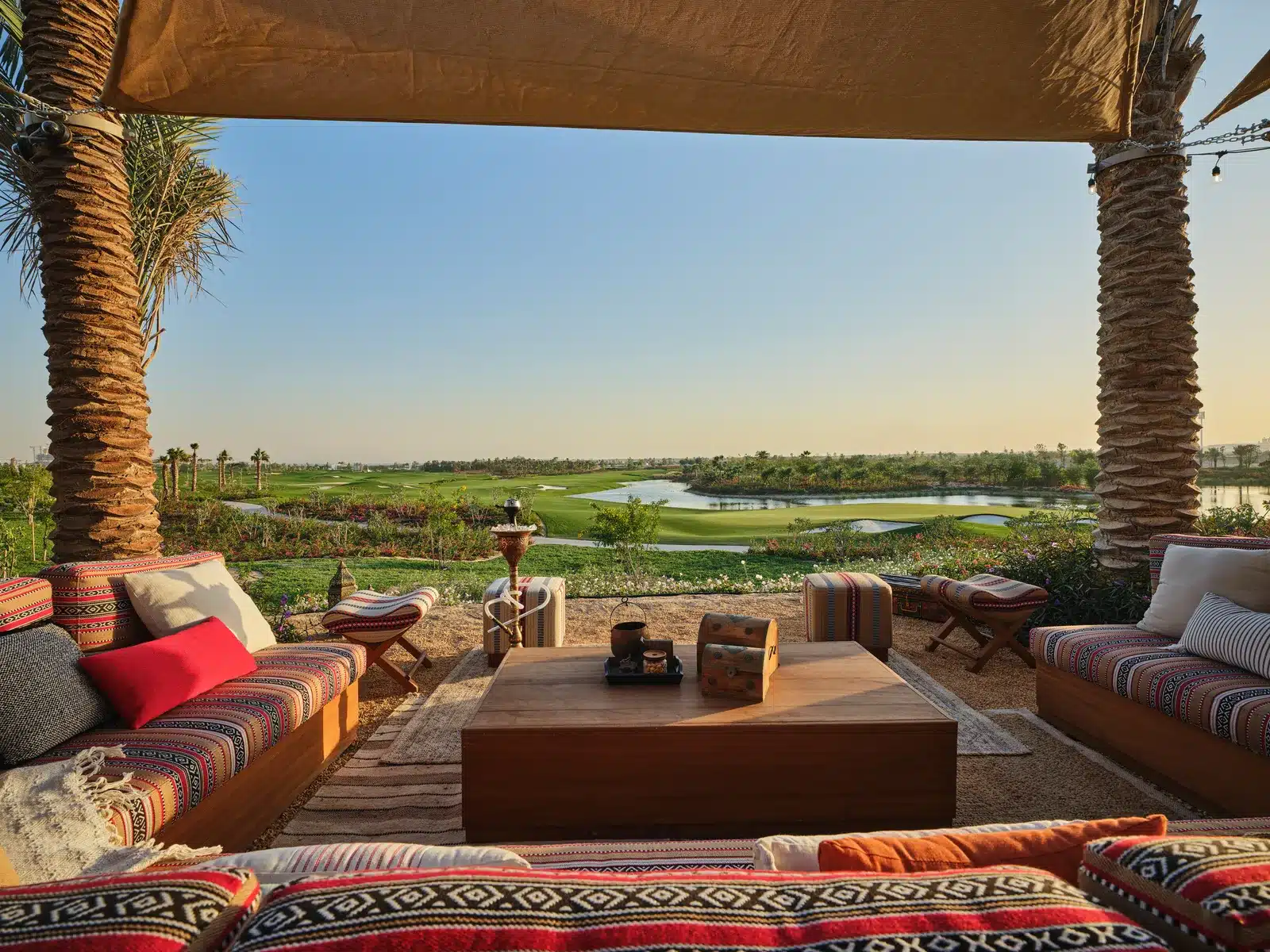
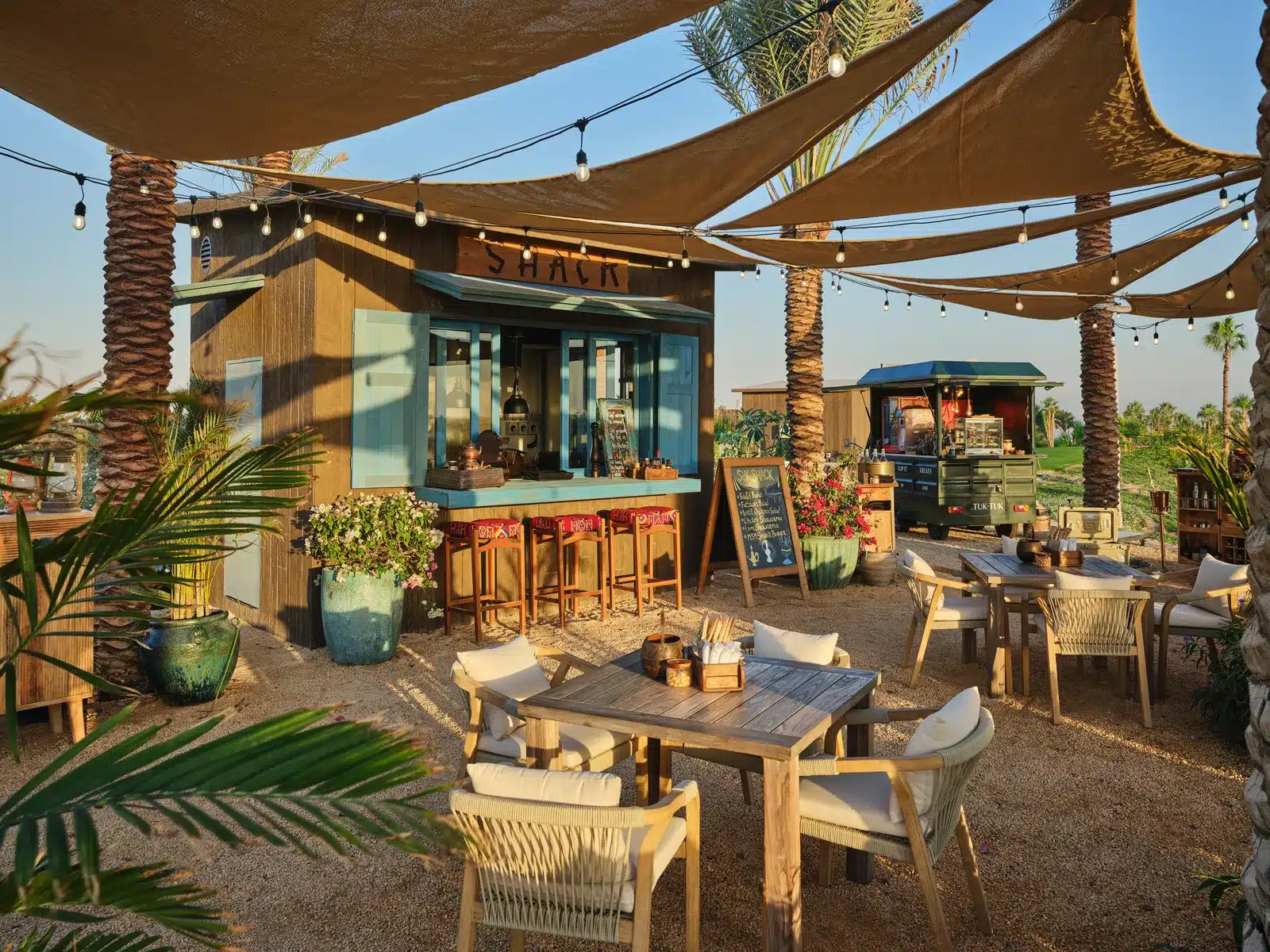
While the comfort stations provide sculptural pauses, Discovery Dunes has also introduced a series of informal gathering spots known as the “Hangs”, relaxed, social spaces inspired by the American tradition of simply hanging out. The Lake House overlooks the 11th hole, while SHK Shack sits between the ninth and tenth, serving shawarma and Tuk Tuk coffee beneath string lights and palms. With majlis-style seating, open-air counters and a deliberately casual feel, they extend the same logic of ease and connection beyond the architecture.
All of this sits within a city increasingly defined by its relationship to golf. Dubai now boasts 13 world-class courses and a fast-growing golf tourism sector, yet Discovery Dunes resists the bigger-is-better logic of the boom. Instead, it frames golf as a social, spatial experience as much as a sporting one, a place to pause, to share something small between shots, to watch the light change across the landscape. In that sense, the comfort stations and Hangs feel less like amenities than like markers of a quieter regional shift, where sport, hospitality and social life coexist on the fairway.
With that experience in mind, it’s hard not to see these spaces as gestures toward a different future for the game. One that values not just how golf is played, but how it is inhabited and shared. The comfort stations are an evolving typology and, whilst golf might be steeped in tradition, these stations enhance through evolution rather than simply disrupt heritage. “We will innovate on comfort station offerings, structures and designs so they continue to invite more people into the game,” he says.
If it wasn’t already clear, Discovery Dunes’ contemporary spin on the halfway house is not about chasing trends, but about responding to the landscape of the game itself, listening to how people actually move through the course, where they want to stop, what they want to share, and how they want to feel while they’re there. Born from a father’s desire to make golf fun for his kids, refined through local flavours and sculptural design, and grounded in a commitment to pause and connection, it’s a way of making the halfway point feel more complete.