Killa Design’s maritime-influenced seafront resort, nestled between Jumeirah Burj Al Arab and the Jumeirah Beach Hotel, completes an iconic waterfront trilogy.
By Rima Alsammarae | July 2025
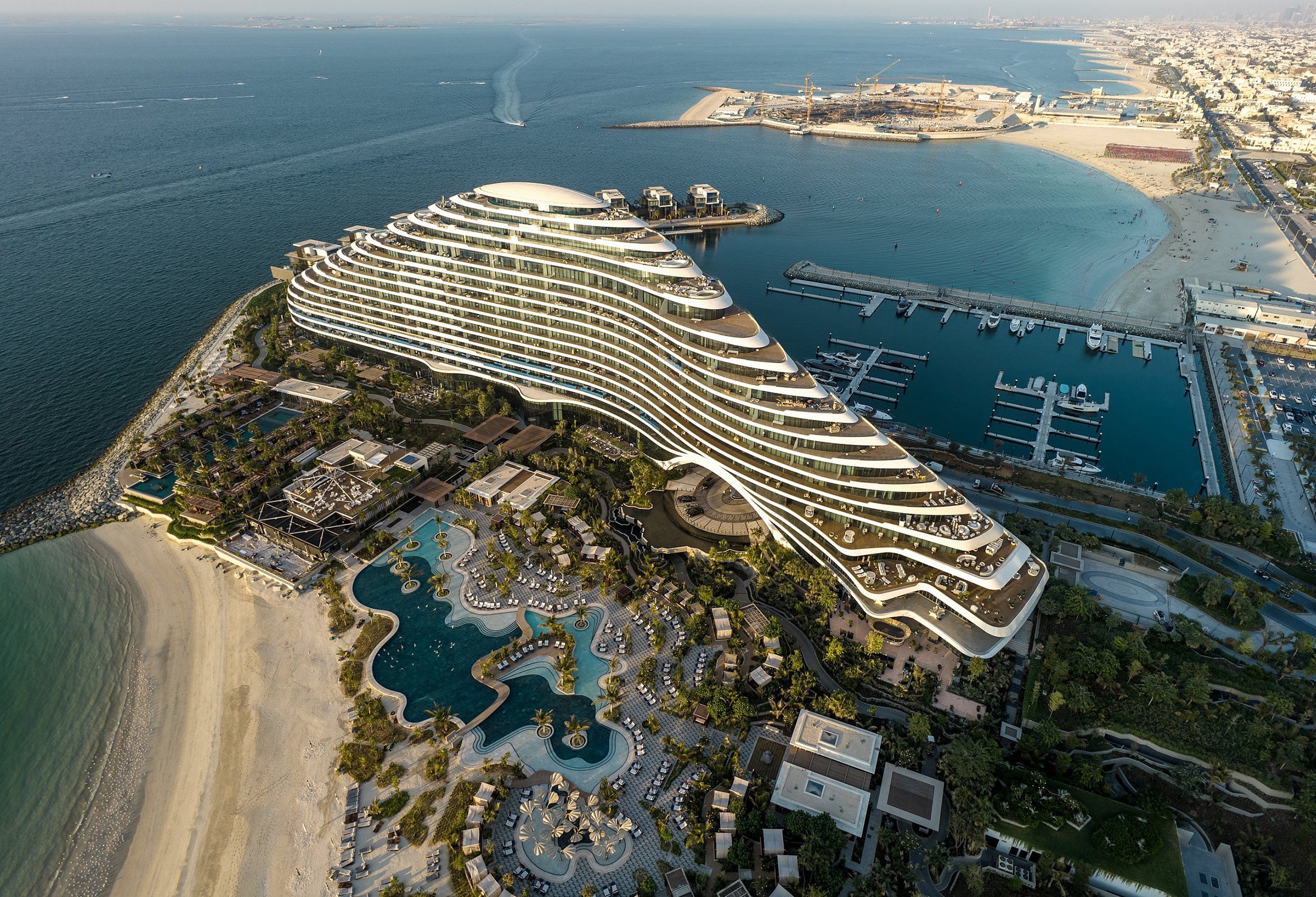
Emerging from Dubai’s historic shoreline like a vessel poised for departure, Jumeirah Marsa Al Arab is not only a new luxury resort, but a bold architectural statement about the future of hospitality design in the city. Designed by Dubai-based Killa Design, the 155,000m2 development completes Jumeirah’s iconic waterfront trilogy, nestled between the sculptural form of Jumeirah Burj Al Arab and the sweeping curves of Jumeirah Beach Hotel.
Jumeirah Marsa Al Arab is the first Jumeirah property to extend out into the sea, and its architecture draws directly from both Dubai’s maritime heritage and contemporary luxury culture. It is also, says practice founder Shaun Killa, a response to Dubai’s architectural evolution – a product of digital design and construction technologies which extends a ‘narrative’ beginning with the traditional architecture of Jumeirah Al Qasr and Jumeirah Mina Al Salam, and transitioning through the ‘classic’ design of Jumeirah Al Naseem, and the modern era represented by the neighbouring hotels.
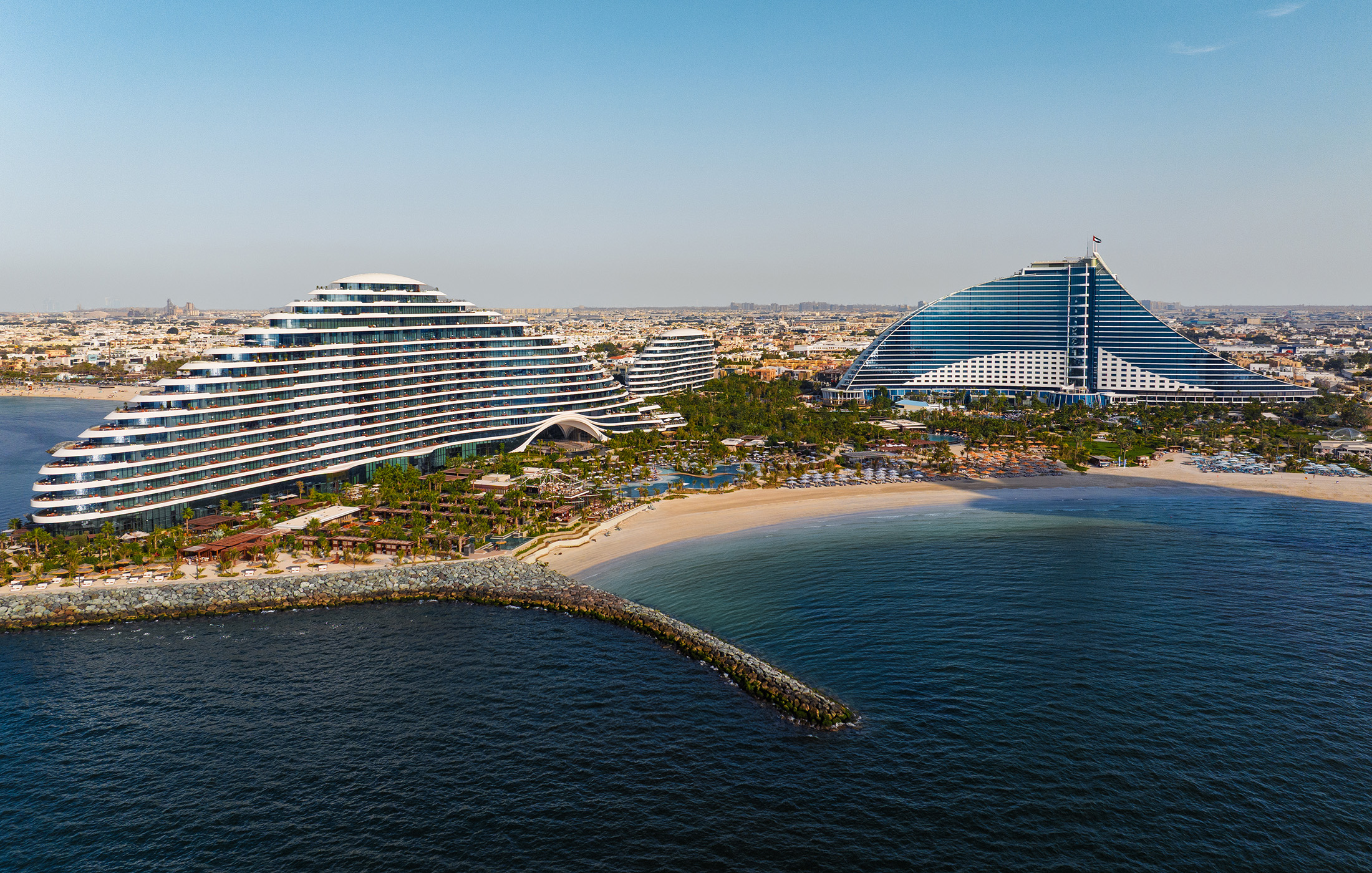
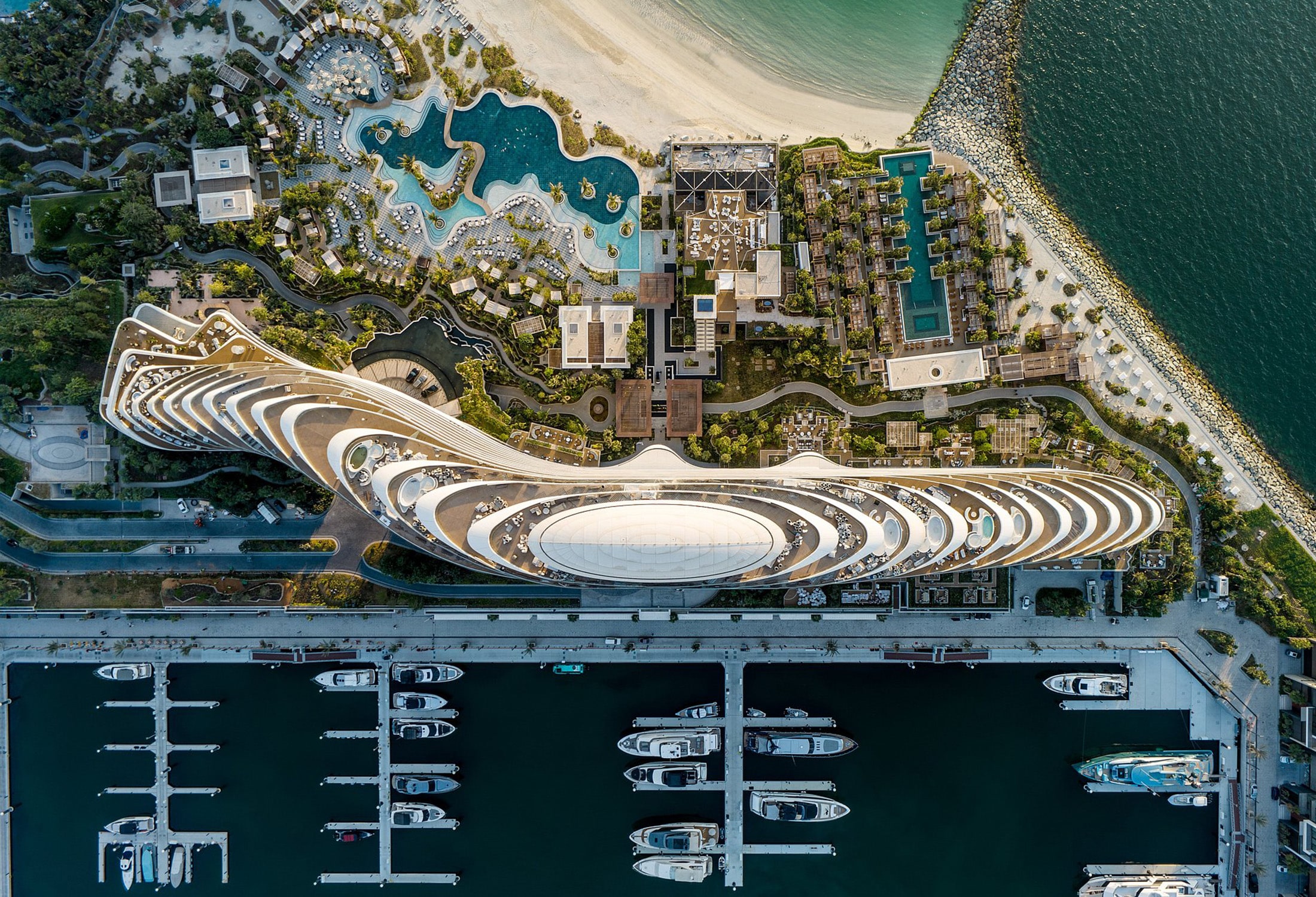
The project comprises two principal buildings: a long, slender 16-storey hotel which snakes along the promontory; and a similarly proportioned residential block set inland. Their fluid, curving forms emulate the silhouette of a superyacht, with spacious terraces, overhanging decks and a refined material palette that blurs the boundary between land and water. From Jumeirah Street, the curved end of the residences extends progressively outward as it rises, like the stern of a boat. Tiered sundecks gradually lower the building’s prow, before the larger hotel rises again, with asymmetric curves in both plan and section intended to create a dynamic sense of movement.
Our design ensures that the moment guests arrive, they are greeted with breathtaking views
‘Although the structure is stationary,’ says Killa, ‘the eye is drawn to perceive it as moving seaward, capturing the essence of motion and fluidity in its architecture.’
From the outset, the site played a pivotal role in shaping the vision for the complex. Situated on a newly reclaimed peninsula extending into the Arabian Gulf, the resort had to negotiate its relationship with two of Dubai’s most recognisable landmarks. Instead of attempting to overshadow these neighbours, Killa Design carefully studied view corridors and existing sightlines to ensure the new development enhanced the overall beachfront composition rather than competing with it.
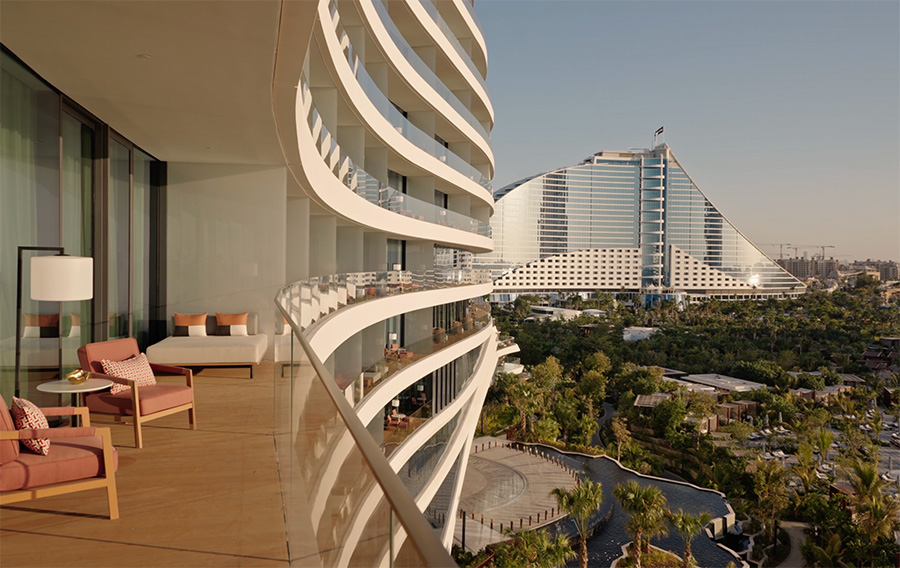
‘We were mindful of preserving the view of Jumeirah Burj Al Arab from the beach to the north-east,’ says Killa. ‘That led us to intentionally separate the hotel and residences, creating an open sightline through the site.’
The layout responds to the peninsula’s geometry through a ‘shift’ in the hotel’s massing – a subtle rotation that divides the landward spa and dining zones from the seaward hotel guest rooms.
Killa Design’s approach included a close focus on the guest journey. This is most apparent in the grand arch – a 36m-wide, four-storey-high engineering feat that supports 11 floors of accommodation above. Positioned at the point where the building shifts in plan, and at the end of the approach road along the western side of the promontory, the arched passage through the hotel creates a dramatic arrival sequence, framing views of the Jumeirah Burj Al Arab and immersing guests in a world where architecture and landscape are in constant dialogue.
‘Unlike traditional hotels, where guests are dropped off behind the building,’ says Killa, ‘our design ensures that the moment guests arrive, they are greeted with breathtaking views. The fluted soffit beneath the arch is gently lit at night, creating a warm and inviting ambience.’
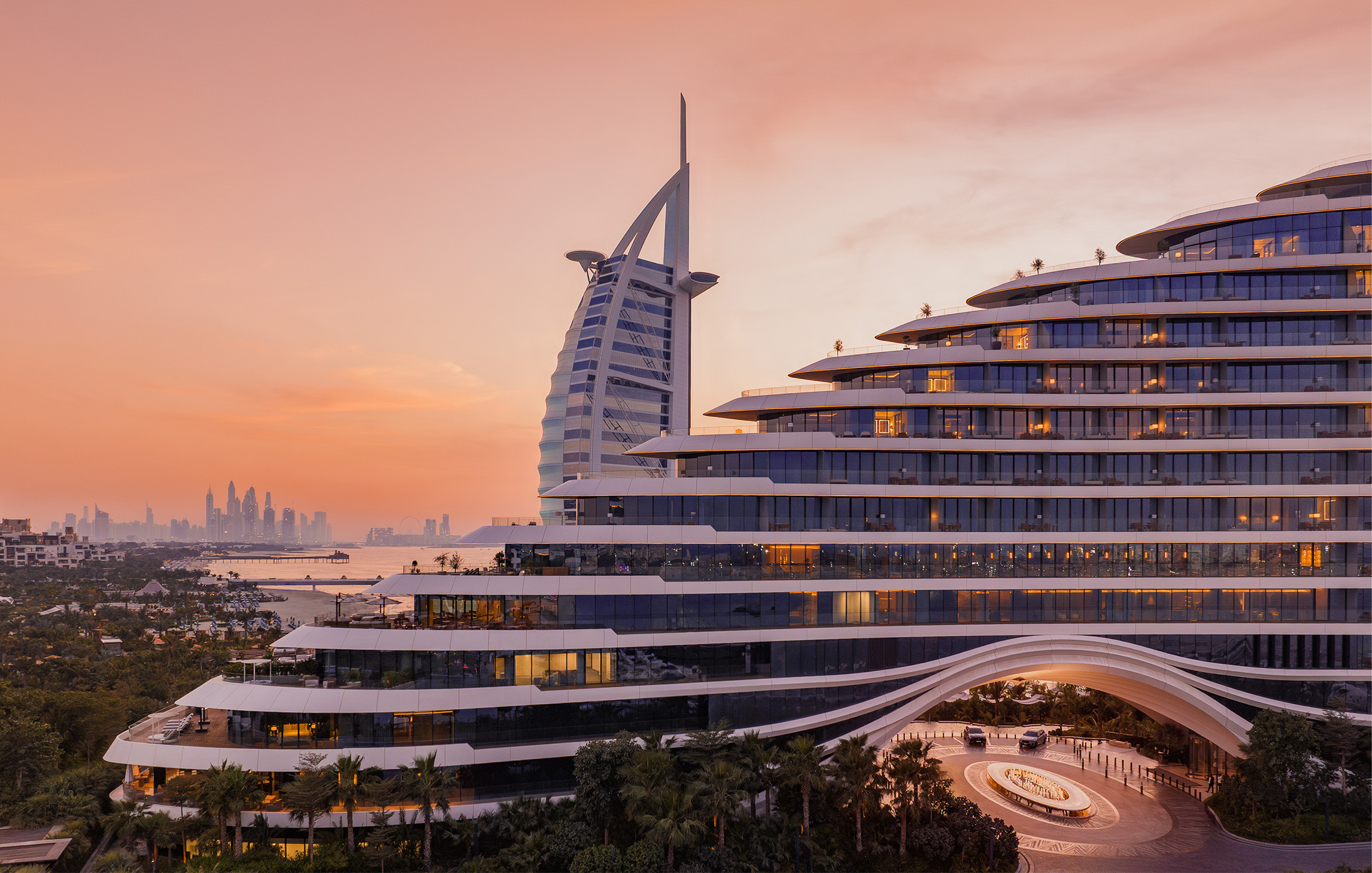
From the lobby, a meandering path passes through bars, restaurants and lounges, all designed as distinct yet interconnected environments – a route that Killa likens to moving towards the bow of a yacht. Outdoor terraces, gardens and pools with 270-degree sea views extend the sense of immersion in the marine environment.
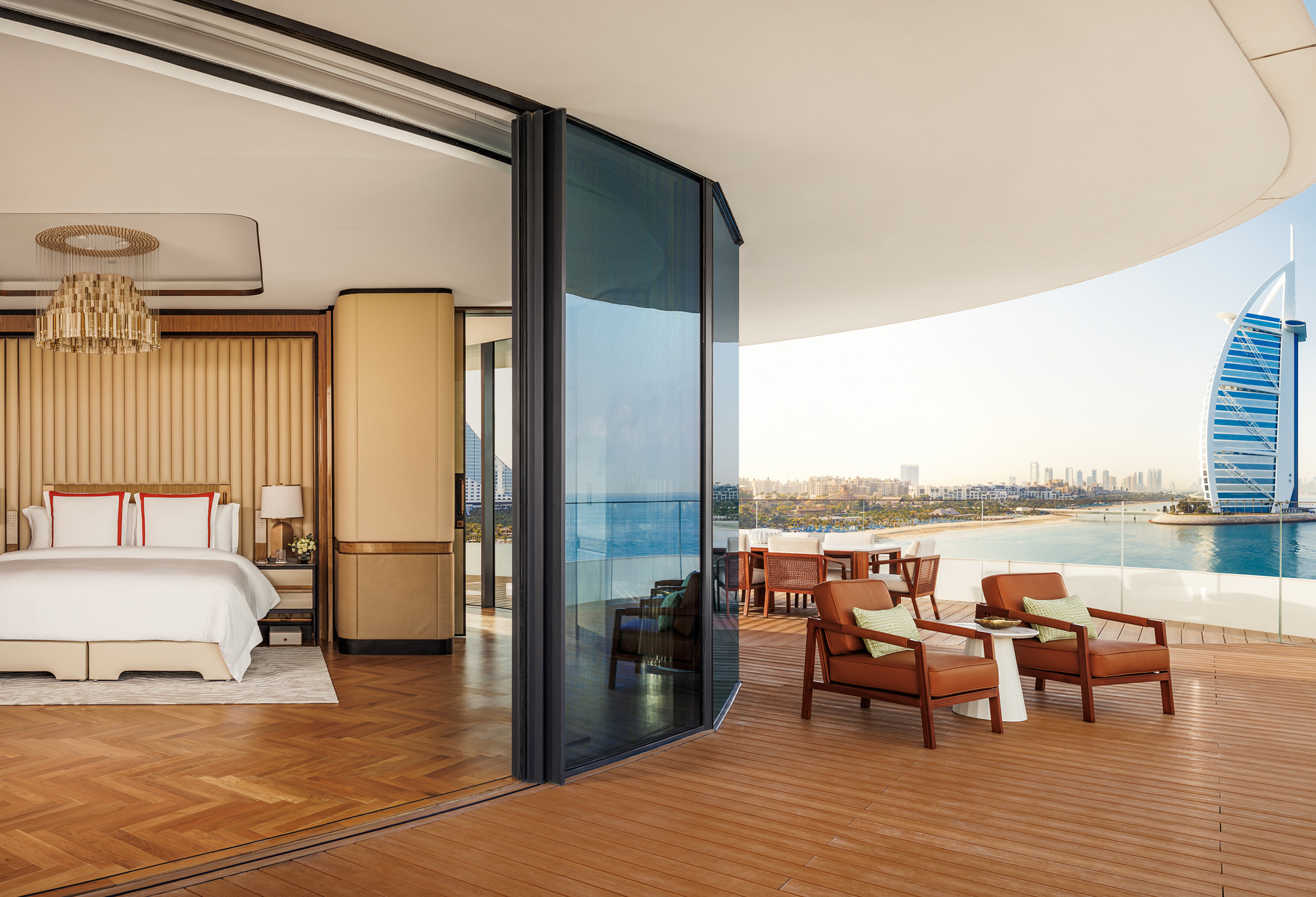
Accommodation includes 386 rooms and suites. In each, the architects aimed to foster a sense of indoor-outdoor living with floor-to-ceiling glazing and wide balconies that draw the horizon into the room. (Interior design was by HBA, Avroko and LTW Designworks.) The uppermost floors house four penthouses — each around 650m2 — while 82 branded residences and a collection of over-water villas provide private luxury living integrated within the resort.
Design languages across the spaces were developed to respond to specific functions. While the penthouses were designed to be ultra-luxurious with expansive open-plan layouts and wraparound terraces, the apartments feature contemporary minimalism and maritime influences. Private villas, cantilevered over the quay wall of a new marina on the north-eastern side, feature their own pools and uninterrupted sea views.
Perhaps unexpectedly given the opulence of the project, Jumeirah Marsa Al Arab is underpinned by a robust sustainability strategy that balances performance with luxury. Self-shading terraces are calculated to reduce energy consumption by up to 40 per cent, while landscaped roofs help with insulation, and grey-water recycling supports irrigation across the lush 260,000-plant landscape. Resort policies exclude single-use plastics, while LED lighting and energy recovery systems further minimise its environmental footprint.
‘These measures reflect our commitment to creating architecture that is environmentally conscious without compromising luxury,’ says Killa.
Material selection was fundamental to creating both durability and a contextual character. Natural stone, including limestone and marble, was used both externally and internally for its textures and ability to weather well in a coastal climate. Lightweight composite materials clad the facade, ensuring resilience against salt-laden winds while maintaining a crisp, contemporary finish.
Externally, landscaping softens the architecture, embedding the resort within a lush, green environment that contrasts with the sleek built forms. Water features and planting zones are integrated throughout the site.
Internally, the nautical narrative continues through the use of wood, intended to evoke the timber decks of yachts. In the lobby, tactile elements such as turquoise velvet seating and wave-patterned rugs subtly echo the movement of the sea. Throughout the interiors, bespoke furniture and handcrafted details draw on the region’s vernacular traditions while maintaining a contemporary aesthetic. The palette includes coral stone, rattan and woven textiles.
‘These elements reflect aspects of the region’s history, such as pearl diving and fishing,’ says Killa. ‘Culturally, we were interested in how we could reference local materials and design traditions in a contemporary way.
‘Materials that reflect the coastal vernacular are layered with more modern finishes to create contrast and balance. It’s not about nostalgia, but about making sure the building feels authentic to where it’s located.’
In a city known for architectural spectacle, Jumeirah Marsa Al Arab distinguishes itself through refinement, innovation, and its sensitivity to context – both built and natural. It represents the culmination of Jumeirah’s architectural narrative along the beachfront, but also a bold step into the future of resort design.
‘This type of project embodies the spirit of Dubai,’ says Killa, ‘the city’s entrepreneurial energy, its maritime soul and its vision for luxury hospitality on a global stage.’
Rima Alsammarae is a writer and former editor of Middle East Architect.