Shaun Killa has shaped Dubai’s skyline like no other. In the interview, the architect talks about new materials and the question of how to create places that impress without burdening. And why for him, sustainability in Dubai is not a contradiction, but a green vision.
December 2025
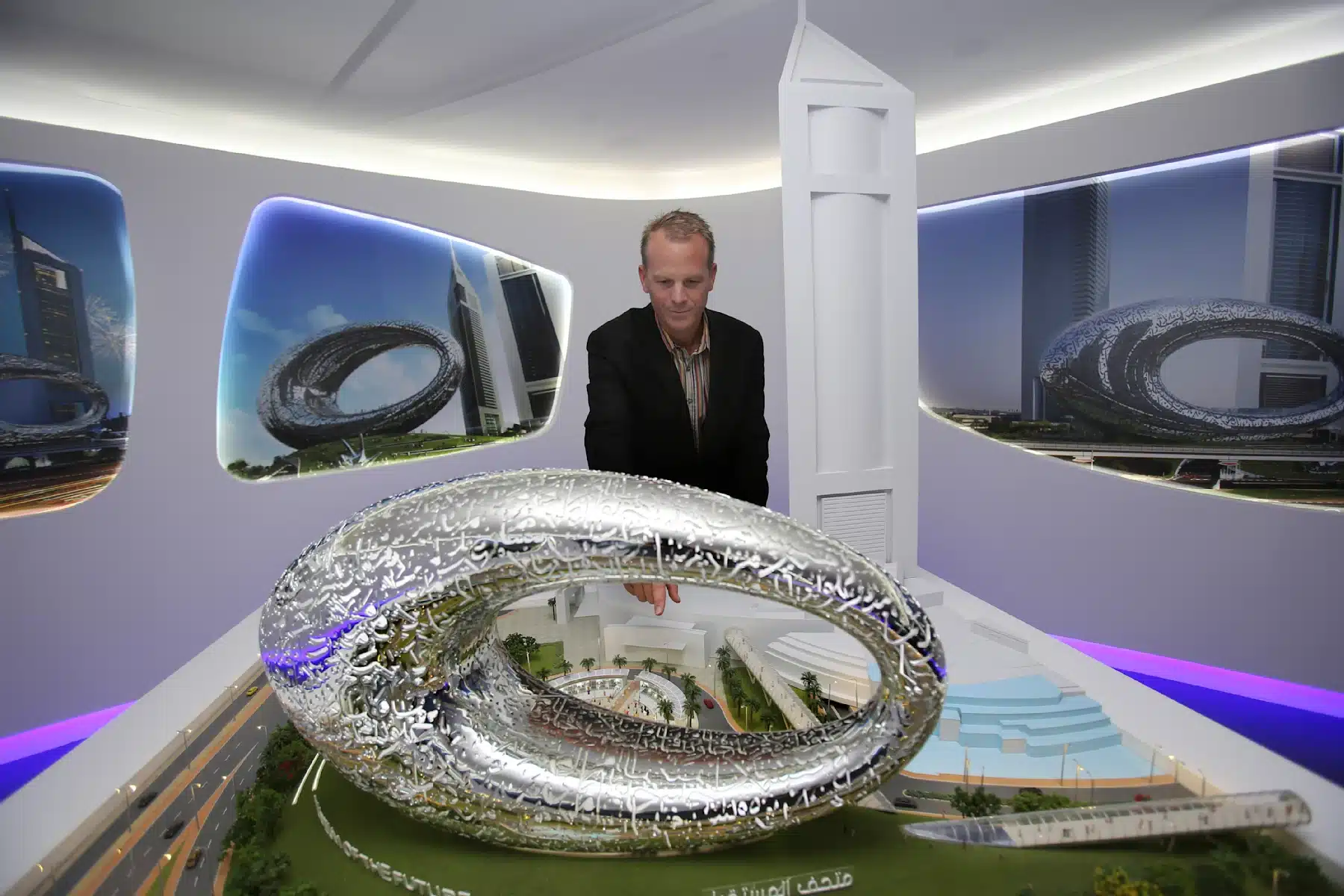
Shaun Killa is an internationally renowned architect from South Africa, best known for his forward-looking and sustainable construction projects. As founder of the architectural studio Killa Design in Dubai, he created one of the city’s landmarks with the “Museum of the Future”. Previously, he was instrumental in the design of the Bahrain World Trade Center, the first high-rise building with integrated wind turbines. Killa combines innovative technology with ecological responsibility and is considered a thought leader for an architecture that is both aesthetically pleasing and environmentally conscious.
WORLD: What technological innovations have made the design of your current hotel creation Marsa Al Arab possible?
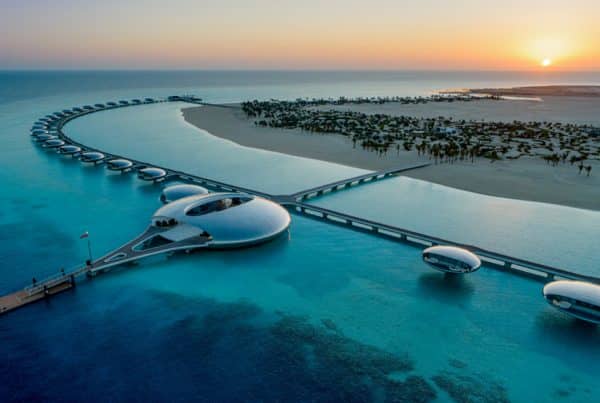
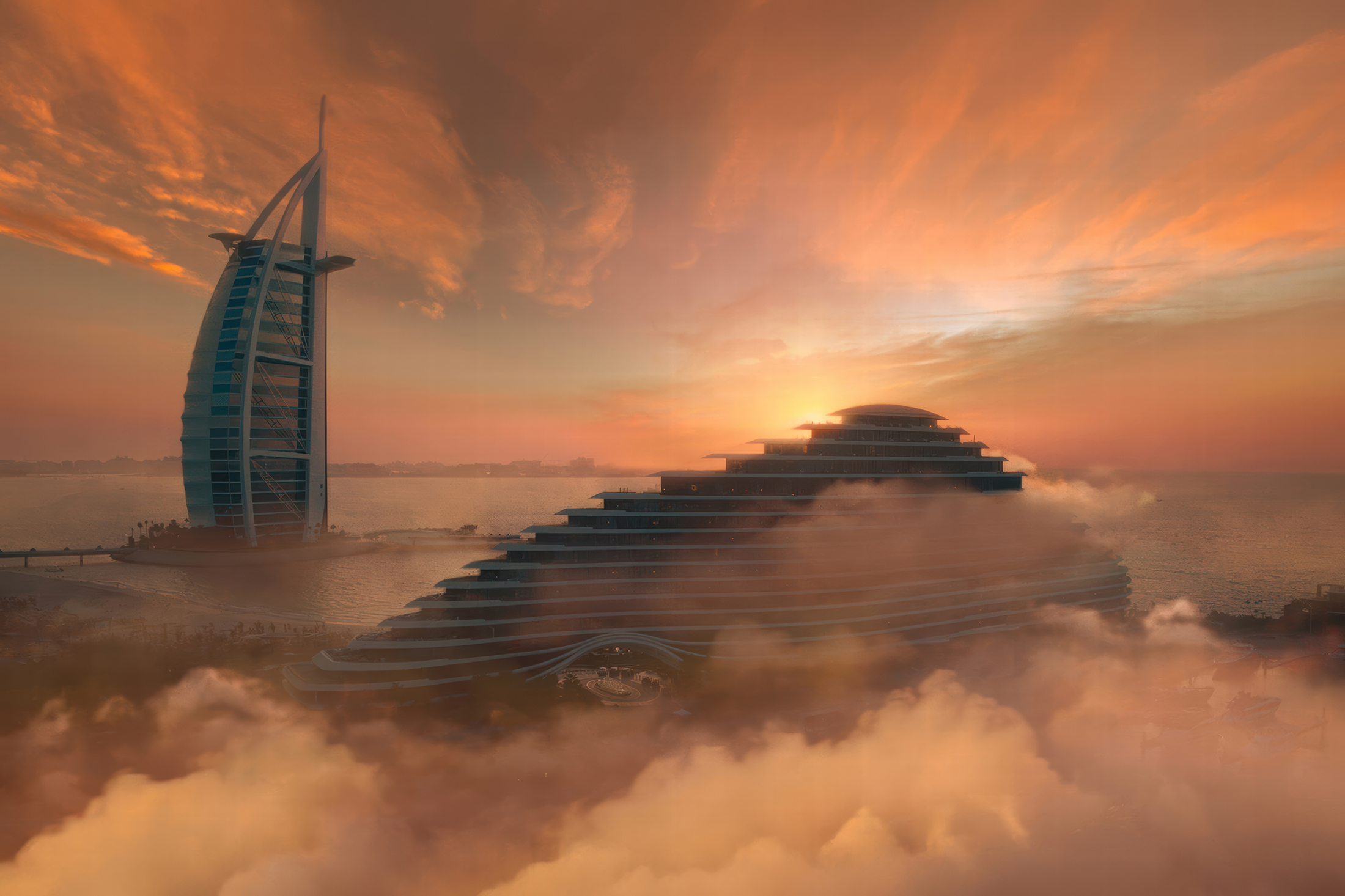
Shaun Killa: This project has challenged conventions at every stage. We used design tools that are based on the parameters of the environment to design the complex double curved facade. In this way, we want to ensure that it is not only aesthetically convincing, but also ecologically. The 36-meter-high arch, which bears nine floors and at the same time frames the Hotel Burj Al Arab, is the result of close cooperation between architects, engineers and manufacturers. Thanks to robotics and CNC manufacturing (with the help of computer-controlled machines, i.e. Ed.) we were able to implement the sculptural complexity with millimeter precision. This technology is not for the show, but for performance.
WORLD: Which sustainable elements have been integrated?
Killa: Sustainability is a fundamental aspect of design and is part of the project to reconcile luxury with environmental responsibility. To achieve this, it was important to create continuous balconies that would give shade to the glass facade. This allowed us to reduce the heat load of the building and reduce the cooling requirement per square meter by up to 40 percent. All mechanical and electrical systems have been designed as low-energy recovery systems and work harmoniously together to reduce overall energy consumption. Grey water recycling (treatment of lightly soiled wastewater from showers, bathtubs, washbasins and machines, i.e. Ed.) is used for irrigation. In addition, we have greened the landscape behind the house – this will capture heat. Water pumps with low energy consumption and variable power as well as LED lighting also help to save energy and reduce CO2 emissions. All buildings of Killa Design are designed to be nature- and environmentally friendly to improve the quality of life in the surrounding urban ecosystems.
World: Is that why you speak of “responsible architecture”?
Killa: Yes, but for me responsible architecture means above all designing with empathy. It cannot be reduced to reducing energy consumption or using the latest technologies. It is about recognizing the cultural, ecological and human-related context of a place and creating something that enriches it. Those who build responsibly strengthen the environment, use resources mindfully and create something that gives back more than it takes. Beauty counts, but only beauty with meaning gives architecture its true power.
WORLD: Which sustainable elements have been integrated?
Killa: Sustainability is a fundamental aspect of design and is part of the project to reconcile luxury with environmental responsibility. To achieve this, it was important to create continuous balconies that would give shade to the glass facade. This allowed us to reduce the heat load of the building and reduce the cooling requirement per square meter by up to 40 percent. All mechanical and electrical systems have been designed as low-energy recovery systems and work harmoniously together to reduce overall energy consumption. Grey water recycling (treatment of lightly soiled wastewater from showers, bathtubs, washbasins and machines, i.e. Ed.) is used for irrigation. In addition, we have greened the landscape behind the house – this will capture heat. Water pumps with low energy consumption and variable power as well as LED lighting also help to save energy and reduce CO2 emissions. All buildings of Killa Design are designed to be nature- and environmentally friendly to improve the quality of life in the surrounding urban ecosystems.
World: Is that why you speak of “responsible architecture”?
Killa: Yes, but for me responsible architecture means above all designing with empathy. It cannot be reduced to reducing energy consumption or using the latest technologies. It is about recognizing the cultural, ecological and human-related context of a place and creating something that enriches it. Those who build responsibly strengthen the environment, use resources mindfully and create something that gives back more than it takes. Beauty counts, but only beauty with meaning gives architecture its true power.
World: How do you manage to combine futuristic forms with functionality?
Killa: In my opinion, futuristic design does not mean that something is only decorative or impractical, but that it is future-oriented. Our forms are never just sculptural, but based on logic: alignment, wind conditions, shading, access possibilities, movement. We work hand in hand with specialists to ensure that what looks ambitious on paper is also feasible, efficient and intuitive for users to grasp. When form and function develop together, the end result is both innovative and playful.
World: What was the biggest structural challenge in this project?
Killa: One of the biggest challenges was to seamlessly combine functionality and architecture, especially in the design and construction of the arch. We had to create a construction that not only frames the perfect view of the Jumeirah Burj Al Arab, but also carries nine floors with a wingspan of 36 meters and a height of twelve meters. This was a technical achievement that had to be carefully planned and executed. Another challenge was the design and construction of the villas on the quay wall, which protrude above the protective rocks. This innovative approach required a high degree of technical skill to realize it.
World: How does your love for the sea affect your creations?
Killa: As an enthusiastic sailor, I find peace and clarity on the water. Sailing has always been more than a pastime for me – it’s my way back to nature and to myself. I feel the harmony between wind, sea and movement. This experience, this intimate dialogue with the elements, has shaped my thinking as a designer. In Jumeirah Marsa Al Arab, this influence can be felt everywhere, from streamlined geometry to the way the spaces unfold like the deck of a ship.
World: What does luxury mean to you today?
Killa: Luxury is subtle today. It is not conspicuous and has nothing to do with extravagance, but with care, comfort and emotional connection. It shows itself in the silent precision with which light falls into a room. It’s about how materials feel under your hands or how easily the space adapts to your needs. True luxury makes it possible to be completely in the here and now. In a world that is getting faster and louder, it offers silence, authenticity and the feeling that everything is well thought out without having to say this explicitly.